

Halloween falls on a Saturday in 2026, so the Monday after is November 2. Students will walk in with a weekend of stories, a lot of sugar, and a late bedtime or two behind them. A plan that treats all of that as an obstacle will lose to it by 9:15.
This post gives you a Monday built the other way around. It opens with a short, structured way to share the weekend, then brings your normal routines back in stages. If you want to know how to get students back on track after Halloween without flattening the fun, the order of the day matters more than any single trick.
Why Monday after a holiday weekend feels so hard (and why it is not misbehavior)
Children spent two or three days outside their usual structure. They stayed up later, ate differently, and had something big to look forward to and then live through. They arrive with a lot of unspoken material they want to tell someone.
That makes the talking, the wiggling, and the distraction predictable. A student who blurts out “I was a skeleton and my brother was a taco” in the middle of your attendance routine is not testing you. He has a story and nowhere to put it yet.
This matters because it changes what you do. If you treat the noise as defiance, you spend the first hour correcting and the kids feel corrected for being excited. If you treat it as a need, you can meet it quickly, on your terms, and then ask for attention once the need has been met.
The same reasoning applies after Christmas, winter break, a long weekend, or a school-wide event. The details change, but the pattern is the same.
Start by letting them share: quick ways to hear every story in five minutes
Give the sharing a clear beginning, a clear end, and a format. Unstructured “tell me about your weekend” turns into twenty minutes with five students and fifteen who never speak. Structure lets everyone have a turn in about five minutes.
Here are formats that work for different ages and room sizes:
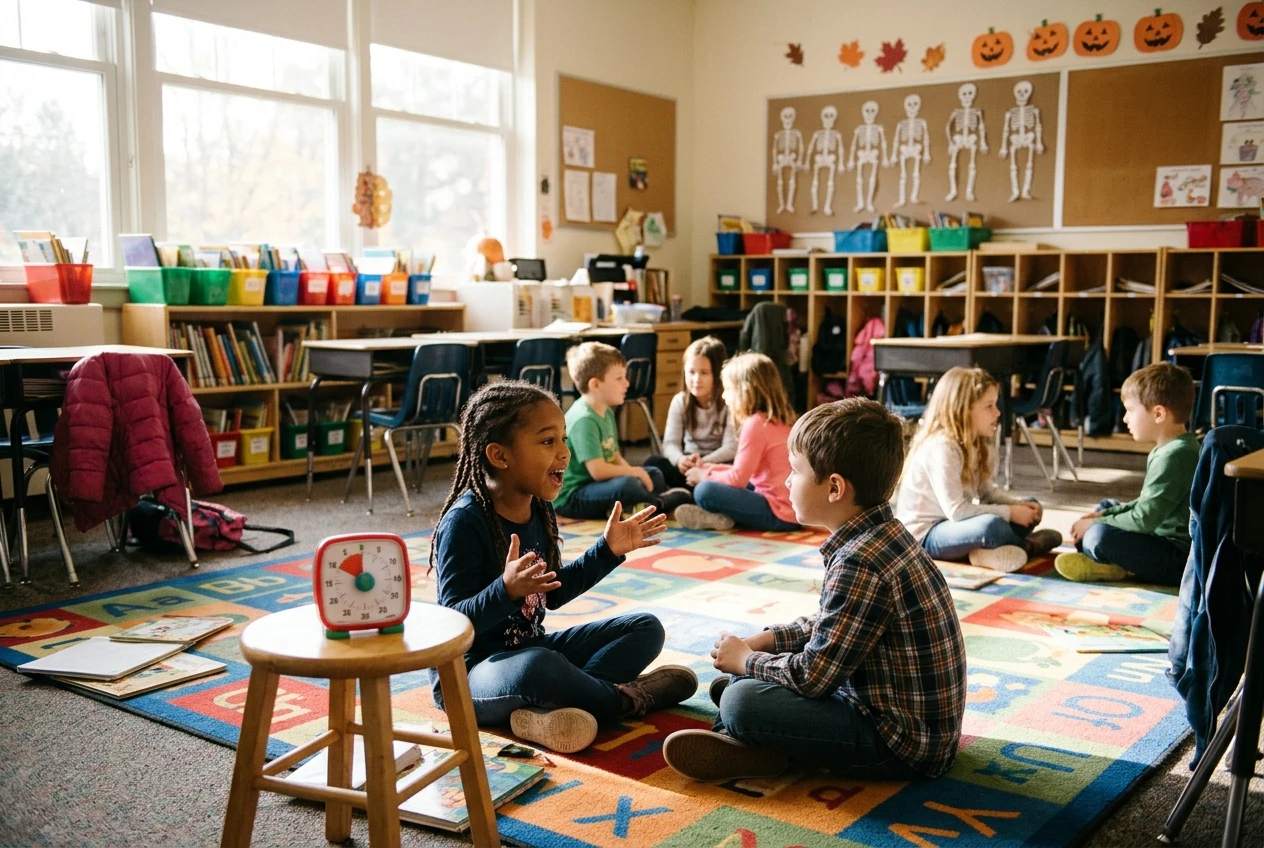
- Partner talk. Pair students and give each partner 60 seconds to tell the best part of the weekend. Use a visible timer and say “switch” when the minute ends. Every child gets to speak, and the room’s volume is useful instead of disruptive.
- One-sentence strips. Each student writes one sentence about the weekend on a slip of paper or sticky note. Collect them and read a handful aloud without names, or let students guess who wrote each one.
- Quick draw, then show. Younger students draw their favorite moment for three minutes, then hold it up while you walk the room. You see everything, and each child gets a moment of recognition.
- Stand-up sorting. Call out categories: “Stand up if you wore a costume. Stay standing if it was homemade.” It takes seconds and gets the wiggles out. It also shows quiet students that they are not the only ones.
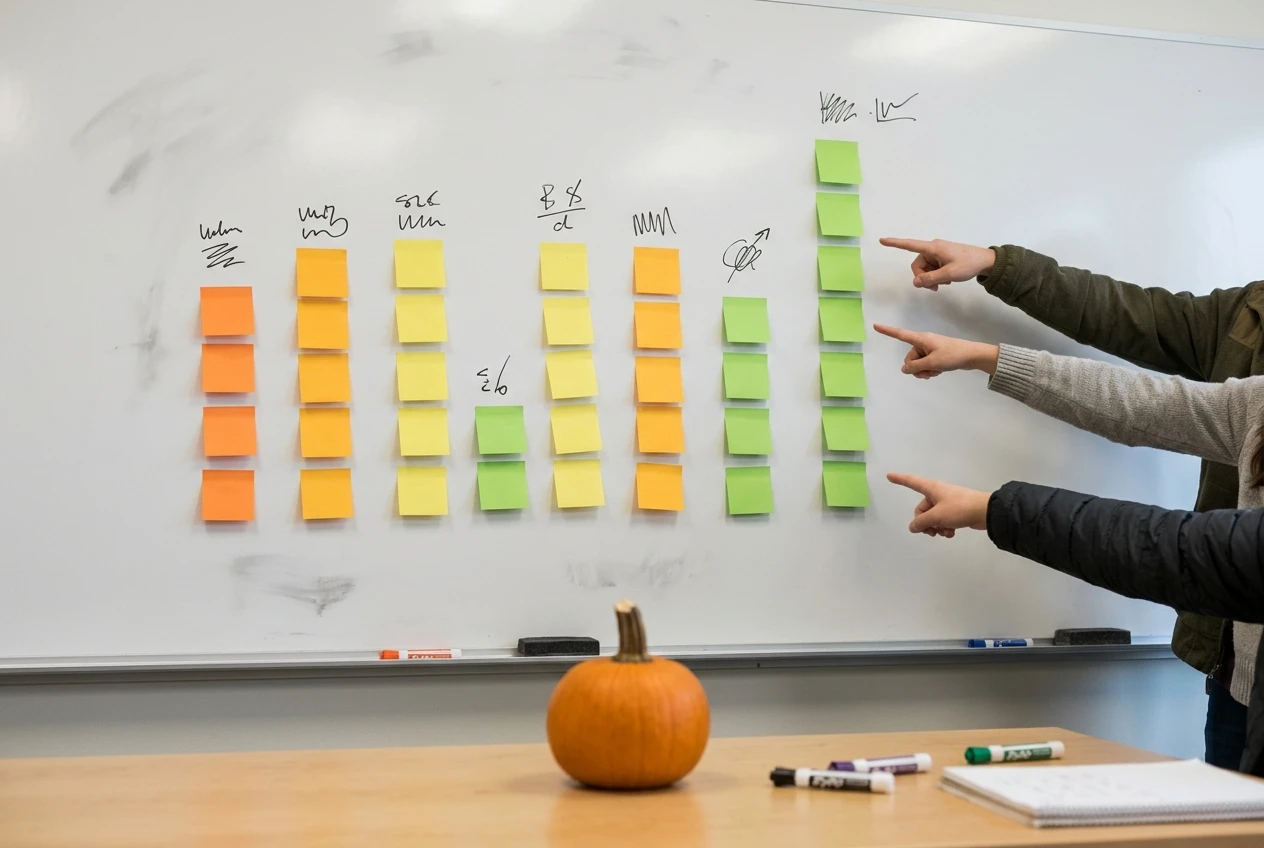
- Sticky-note graph. Students put a note under a heading like “Favorite candy,” “Trick-or-treated,” or “Stayed home.” You now have a graph to use later in the day.
For middle school, partner talk with a prompt works best, such as “Describe one thing from the weekend in exactly three sentences.” Older students tend to prefer a constraint to an open invitation, and the limit keeps the share from turning into a performance.
If you homeschool with one or two children, you can do the same thing at the table. Ask for a story, then ask a follow-up question or two. Children generally want an attentive listener more than a formal activity.
Whatever you choose, say how long it will last before you begin, then stop when the timer ends. The ending matters as much as the start. Students will trust the structure the next time if they see you keep to it.
Use the leftover excitement: ways to tie the holiday into your first lesson
Once everyone has been heard, you can use the same energy for the first academic task. A lesson with a familiar hook gets attention more easily than a cold start on a new unit.
Some options by subject:
- Math. Use the sticky-note graph from your sharing time. Younger students can count and compare columns. Older students can calculate fractions or percentages of the class in each category and talk about how to display the data.
- Writing. Ask students to write a descriptive paragraph about one moment from the weekend, focusing on what they saw, heard, or smelled. This works as a narrative or descriptive writing exercise, and every student already has material.
- Science. If a pumpkin is still around, observe it. Students can describe its changes, make predictions, or sort objects by whether they float. Candy can also serve as a sorting or observation tool, if your school allows food in the classroom.
- Reading. Pick a short text with a holiday setting for a read-aloud or a close reading passage. Familiar subject matter lowers the effort of getting started.
- Social studies. Ask older students to compare how their families celebrate and what they notice are the common features. This builds on what they just shared and takes the discussion in a more analytical direction.
Keep this lesson to the skills you were already planning to teach. The holiday is the context, not a replacement for your curriculum. If your Monday plan was fractions, you are still teaching fractions, only with a data set that the students care about.
Rebuild routines in small steps, not all at once
Do not try to restore every routine at full strength in the first ten minutes. After a break, students need to remember what the routines are, and rehearsal works better than reminders.
Choose the two or three routines that keep your day running. For many classrooms these are entering the room, getting attention, and moving between activities. Bring them back one at a time through the morning.
A simple pattern for each routine:
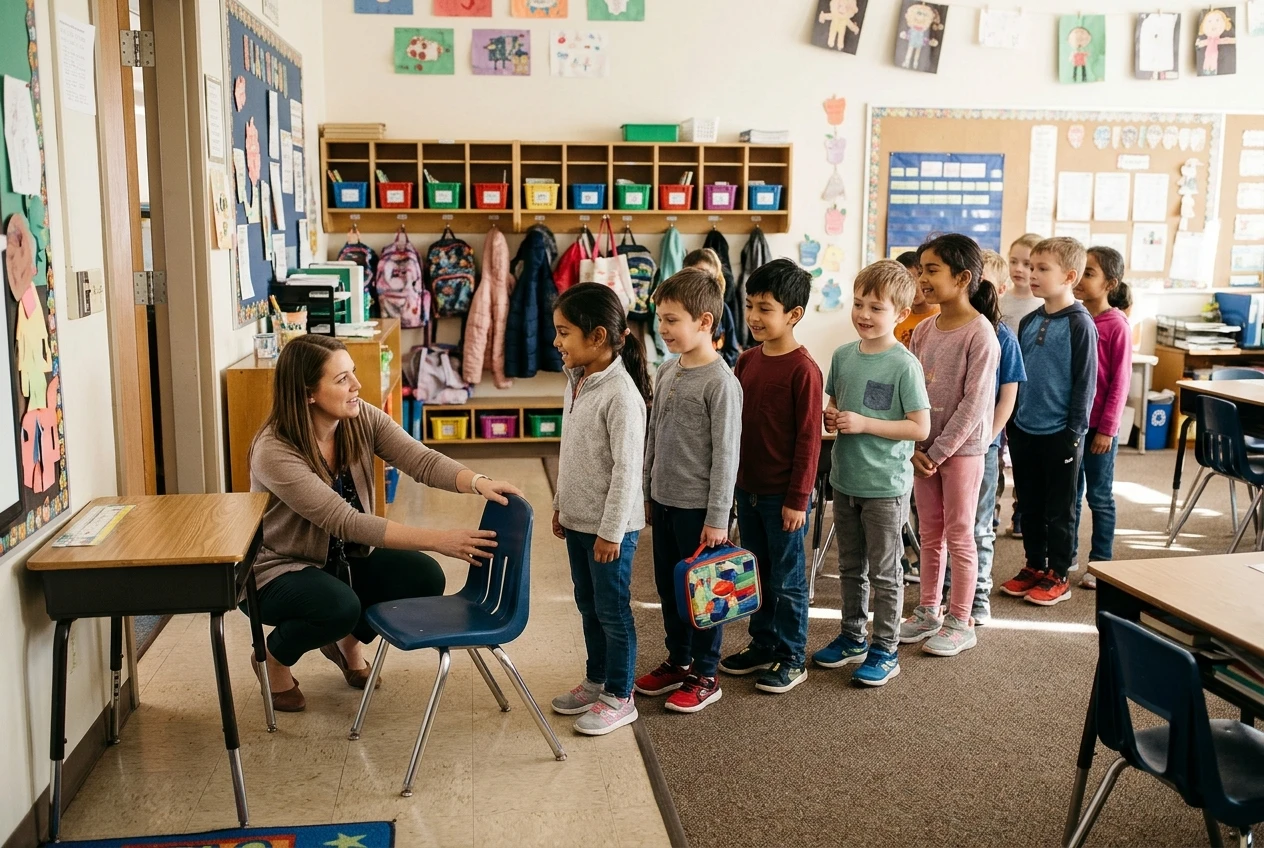
- Name it: “We are going to practice how we line up for specials.”
- Model it, or ask a student to.
- Have the class try it once.
- Give specific feedback: “I saw everyone push in their chairs.”
This takes less than two minutes per routine. Use it when the routine is about to happen, not as a block of practice at the start of the day. Practice lining up right before you line up, and practice the transition to independent work right before independent work.
Less critical routines can wait until Tuesday. If your students usually keep a detailed morning folder system and it is not going well, simplify it for one day rather than fighting about it.
Plan the Monday schedule: what to put early, what to save for later
Think of Monday in three parts: connect, work, and ease out.
Early in the day:
- The structured share (about five minutes).
- A short movement or stretch break right after it.
- Your holiday-tied lesson, followed by the first core subject while attention is still fresh.
- One or two routine rehearsals, placed right before they are needed.
Middle of the day:
- Your most demanding new content, if you can place it after a movement break and a drink of water. Introducing a brand-new concept on a day when attention is fragile is risky, so consider reviewing instead.
- Independent practice with material students already know. Familiar work builds momentum.
Later in the day:
- Hands-on or collaborative tasks, such as projects, centers, or read-alouds.
- Anything that runs well with lower energy, since tired students tend to do better with a change of pace.
Hold off on high-stakes assessments on this day if you have a choice. Students can show what they know more reliably on a day when they are rested and settled. If a test is unavoidable, add a short settling routine before it, such as a minute of quiet breathing or silent reading.
Handle the kids who are tired, sugar-crashed, or sad the holiday is over
Some students will not match the room’s energy. A few will be low, slow, or irritable, and some will be sad that the holiday has ended.
For tired students, offer low-pressure ways to participate. A child who is yawning at the carpet may do better with a chair, a quieter spot, or a task that does not require speaking. Water and a bathroom break help too. Follow your school’s food policies if a student needs a snack.
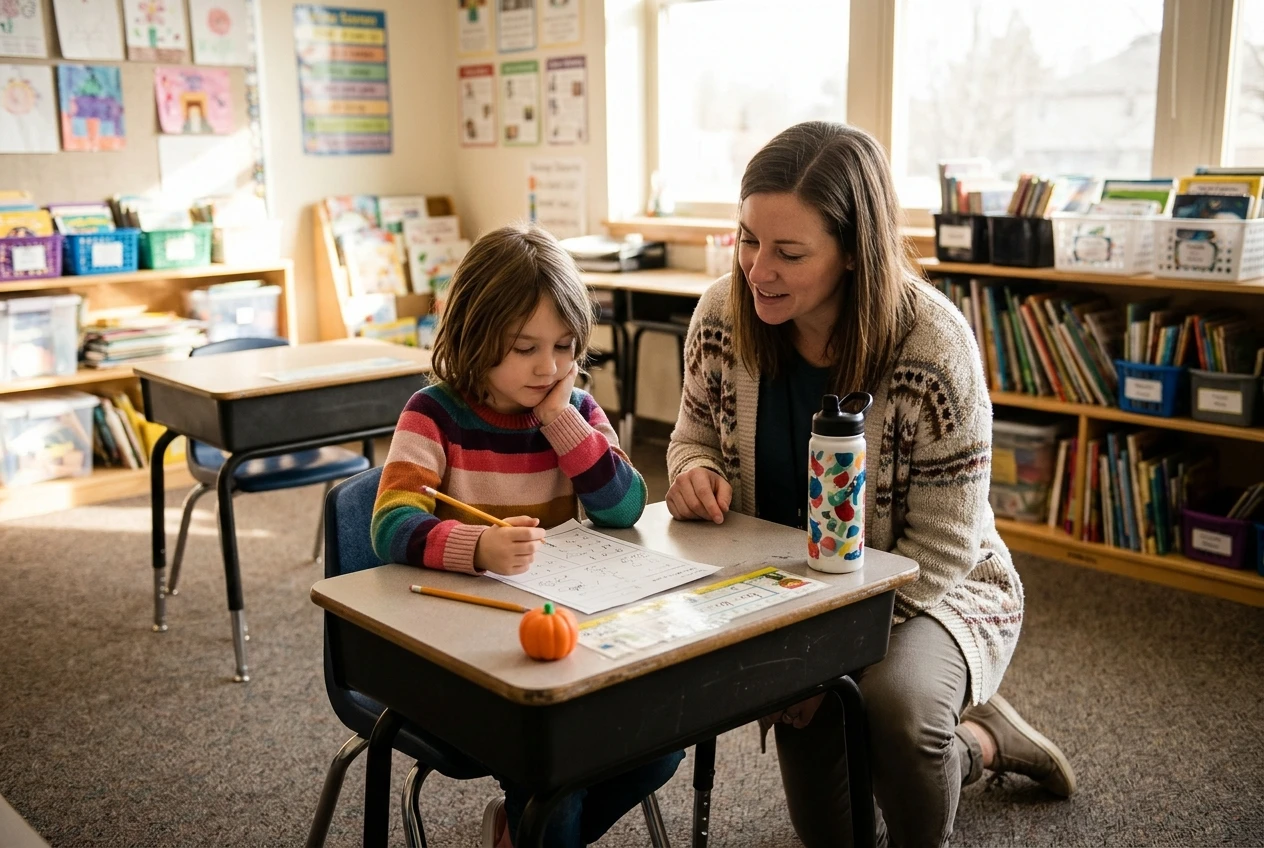
For students who seem to have crashed after a lot of candy, keep your response neutral. Avoid commenting on what they ate. Give them a clear, simple task and check in a few minutes later.
For students who are sad, a short private check-in does more than a public one. You might say, “You seem quiet today. Do you want to tell me about it, or would you rather just work for a bit?” Offering a choice respects the child. Some will talk, and some will just appreciate being noticed.
Also watch for students whose weekend was not a good one. Not every child had a costume or a family celebration. In your sharing time, make participation optional, and offer prompts that anyone can answer, such as “something you ate,” “something you saw,” or “something you did.” That way no child has to explain what they did not have.
If a student is struggling in a way that goes beyond one tired Monday, follow your school’s usual process for raising a concern.
A reusable holiday-Monday checklist for Halloween, Christmas, and beyond
Copy this list and adjust it for your grade level and classroom.
Before the day
- Pick one structured sharing format and have the materials ready (timer, sticky notes, paper).
- Plan one lesson that uses the holiday as its context.
- Choose two or three routines to rehearse, and note when in the day each will come up.
- Move any high-stakes assessment to later in the week if you can.
During the day
- Tell students how long the sharing will take, then end it on time.
- Follow the share with a movement break.
- Teach the holiday-tied lesson early.
- Rehearse each routine just before it is needed, with specific praise.
- Put new, demanding content after a break, or review instead.
- Save collaborative and hands-on work for later.
For individual students
- Offer water, a quieter spot, or a simpler task to tired students.
- Check in privately with students who seem low.
- Keep sharing prompts open enough that every child can answer.
After the day
- Note which routines still need work and plan to rehearse them Tuesday.
- Write down which sharing format worked best so you can use it after the next holiday.
By Tuesday, most classes are close to normal. A Monday that gives students a place for their excitement tends to make the rest of the week easier to manage, and the same plan will work again after winter break.