

Students who have lived through a school shooting, a flood or tornado, violence at home, or other traumatic community event, still come to class the next week and are expected to read, write and sit through a test. Teachers often see the effects before anyone else does, and many want to know how to help students cope with trauma in the classroom without either ignoring what happened or letting their learning stall. Two things need to run side by side. The first is steady, predictable emotional support. The second is small academic steps that you can adjust as the student recovers.
This article covers the first days and the following weeks separately, because the needs are different. It also says plainly where a classroom teacher’s role ends and a counselor’s begins.
What Trauma Can Look Like in a Student, and Why It Often Shows Up as a School Problem First
A student rarely says “I am struggling because of what happened.” More often a teacher sees a change in behavior or work:
- Homework stops arriving, or work that was usually tidy becomes rushed or unfinished.
- The student seems unable to concentrate, or reads the same paragraph repeatedly.
- Irritability, sudden anger or tearfulness appears over small things.
- A quiet student withdraws further, or a social student becomes isolated.
- Complaints of headaches or stomachaches increase, along with requests to visit the nurse.
- The student startles at loud sounds, or watches doors and windows.
- Younger children cling to adults, ask to call home, or return to behaviors they had outgrown.
School is where these changes become visible because school makes constant demands on attention, memory, patience and self-control. Stress and fear use up the same mental resources those demands require. A student may also not connect the behavior to the event, and adults at home may be coping with the same crisis and have little room to notice.
You are not diagnosing anything. Your job is to notice changes, write down what you see, and respond with steadiness. A student who is suddenly “lazy” or “defiant” after a community crisis is more likely showing stress than a character problem.
The First Days: Safety, Routine and Honest, Age-Appropriate Words
In the first days, the aim is to make the classroom feel safe and predictable. Learning goals come second for now.
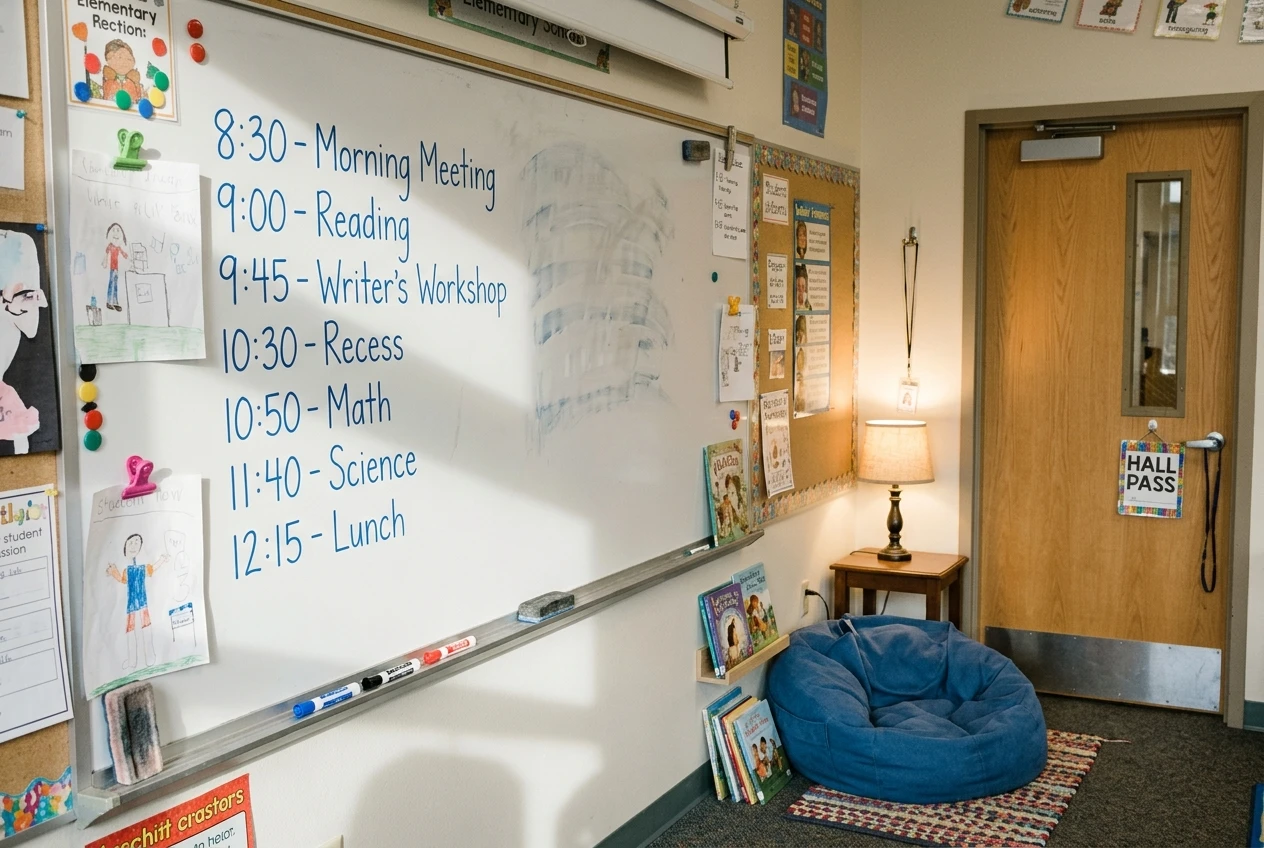
Keep the routine visible. Post the day’s schedule and walk through it at the start of class. Tell students about any change before it happens, such as a different room, a substitute or a drill. Predictability lowers the amount of vigilance a frightened student has to maintain.
Use honest, short words. Students notice when adults avoid the subject, and silence can leave them to fill the gaps with rumors from social media. Say what is known in plain language, and say “I don’t know” when you don’t. Avoid graphic details and speculation. Do not promise that the event will never happen again, because you cannot know that. You can say what the adults at school are doing to keep them safe today.
Match the words to the age. Younger children need brief, concrete sentences and reassurance about who is looking after them. Middle schoolers often want facts and may ask pointed questions about what went wrong. Teenagers may want to talk about fairness, blame or politics, and they respond better to being treated as capable of handling accurate information. Follow your school’s crisis guidance on what to share, and check with the counselor if you are unsure.
Offer choices without forcing talk. Let students know they can speak with you, with the counselor or with another adult they trust, and that they do not have to. A private word at the door, such as “I’m glad you’re here, tell me if you need a break,” often works better than a whole-class discussion that pressures everyone to share.
Make it easy to step out. Agree on a simple signal or pass for a student who needs a few minutes in a quiet place, and decide where that place is. Set a time limit and check in when the student returns.
Pause high-stakes assessment. In the first days, a major test measures stress more than learning. Move it, and tell students the new date.
Some Examples: Three Kinds of Crisis, Three Different Needs
The core approach is the same across crises, but the details change with what the student has been through.
Shootings
Students may fear the building itself. Noises, sirens, lockdown drills, unfamiliar adults and even the sound of a slamming door can set off strong reactions. Give advance notice of drills and alarms where your school’s procedures allow it. Tell students where the exits are and who is on duty. Some students will have lost a friend or know someone who was hurt, so expect grief alongside fear.
Be careful with memorials, moments of silence and class discussions, and let students opt out. Watch for rumors circulating online and correct them calmly with what the school has confirmed.
Severe Weather
After floods, tornadoes or storms, the damage is often practical as well as emotional. A student may be living in a temporary home, sharing a room, missing books and devices, or lacking a quiet place to do homework. Some families relocate and the student changes schools or misses weeks.

Ask what the student needs for school: supplies, a charged laptop, a way to get there, meals. Connect the family with whoever at your school handles these resources. Weather alerts and storm forecasts can bring fear back, so students may be anxious on days that look ordinary to you. Telling them in advance what the school’s plan is for severe weather can help.
Violence at Home
When a student is affected by domestic violence in the community or in their own home, safety and confidentiality matter most. Teachers have reporting duties, which vary by place and role. Learn your school’s policy and the law that applies to you before you need it.
If a student tells you something, listen, stay calm and do not push for details. Do not promise to keep it secret, because you may be required to report it. Explain honestly what you will do and who you will tell. Do not confront a parent or contact the family about a disclosure without first talking to the counselor or an administrator, because a well-meant message home can put the child at greater risk.
Day to day, school may be the most stable place in this student’s life. Keep your routines, your tone and your expectations predictable.
Adjusting the Work Without Lowering the Bar
Lowering the bar means deciding the student can no longer learn the material. Adjusting the work means keeping the learning goal and changing the route to it. Students generally recover better when adults continue to believe they are capable.
Start by deciding which goals matter most this term and which can wait. Then choose adjustments that are specific and temporary:
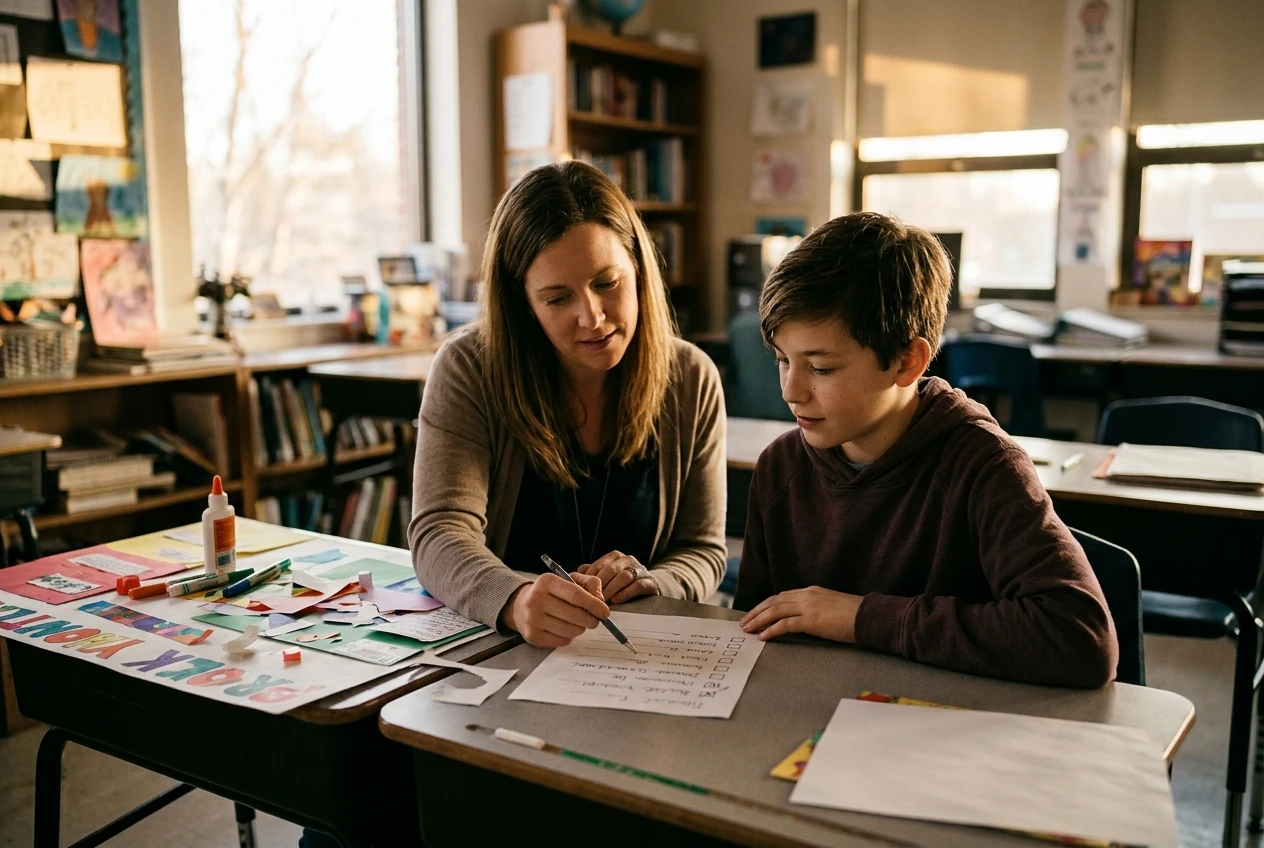
- Deadlines: give a new date in writing rather than “whenever you can.” An open deadline tends to grow into a pile that feels impossible.
- Workload: reduce quantity but keep quality. Ask for the five problems that show the skill instead of all twenty, or one paragraph that makes the argument instead of a full essay.
- Chunking: break a project into short stages with a check at each one, so the student does not face the whole task at once.
- Ways to show learning: let a student explain a concept aloud, draw a diagram, or talk it through in a short conference when writing is hard.
- Retakes and revisions: allow a student to redo a task that was done during the worst days, so one bad week does not set the grade for the term.
- Written instructions: stress affects memory, so give instructions and next steps in writing, and keep a checklist for multi-part work.
- Environment: offer a quiet spot for tests, or a short break in the middle of one.
Avoid giving a zero without a conversation. If work is missing, ask what got in the way and agree on one next step. Tell the student which expectations are staying the same, so the adjustments feel like support and not a verdict about their ability. A short written plan, agreed with the student and shared with the family and the counselor when appropriate, keeps everyone consistent.
Rebuilding Momentum Over Weeks: Small Wins, Trusted Adults and Consistent Expectations
After the first days, a student’s needs shift from immediate safety toward regaining confidence. The work can be gradual.
Build small, visible wins. Set tasks the student can finish in one sitting and name what they accomplished. Success on a manageable task makes the next one easier to start. Increase difficulty in small increments.
Keep a trusted adult in view. Students recover with the help of relationships. If the student has someone at school they trust, make sure that person knows the situation and has time to check in. A short, regular check-in at the same point each day, even two minutes, shows the student that someone is paying attention.
Hold expectations consistently. Behavior rules, respect and effort still apply. Respond to a hard day by separating the behavior from the student: address what happened, repair it, and move on without punishment that treats the reaction as defiance. Consistency is what lets a student trust that the classroom is stable.
Review the adjustments. Every week or two, look at what you changed and decide what can return to normal. Restore workload and deadlines step by step. Some supports can stay a little longer than others.
Expect uneven progress. Recovery is rarely a straight line. Dates connected to the event, news coverage, a storm warning or a court case in the community can bring reactions back. When a student has a rough patch, return to the first-days steps: routine, calm words and a smaller task.
Spotting When a Student Needs More Than the Classroom Can Give, and How to Refer
You are one of the adults in a student’s life, and you are not their therapist. Refer to the counselor, school psychologist or administrator when you see any of the following:
- The student talks about hurting themselves or others, or about not wanting to be alive. Treat this as urgent: do not leave the student alone, and follow your school’s protocol immediately.
- The student discloses abuse, or you see signs of it.
- Distress is intense, does not ease over time, or keeps the student from functioning at school.
- Reactions are getting worse, such as panic, repeated flashbacks, frequent absences, major changes in eating or sleep, or new substance use.
- Aggression, withdrawal or fear is changing the student’s friendships and daily life.
To make a referral, find out your school’s process and use it. Bring specific, factual observations: “Over the past two weeks, Maya has missed four assignments, put her head down in most lessons, and asked to go to the nurse three times.” Facts help the counselor more than conclusions. Tell the student, in a kind and direct way, that you are involving someone whose job is to help, and why. Involve the family unless doing so could put the student at risk, and check with the counselor about that.
A referral does not end your role. Keep the check-ins and the classroom routines going. The student still benefits from knowing you are paying attention.
Looking After Yourself So You Can Keep Showing Up
Teachers and staff are often affected by the same event as their students. You may be grieving, frightened or exhausted, and you are still expected to be the calm adult in the room. Listening to students’ experiences also takes a toll over time.
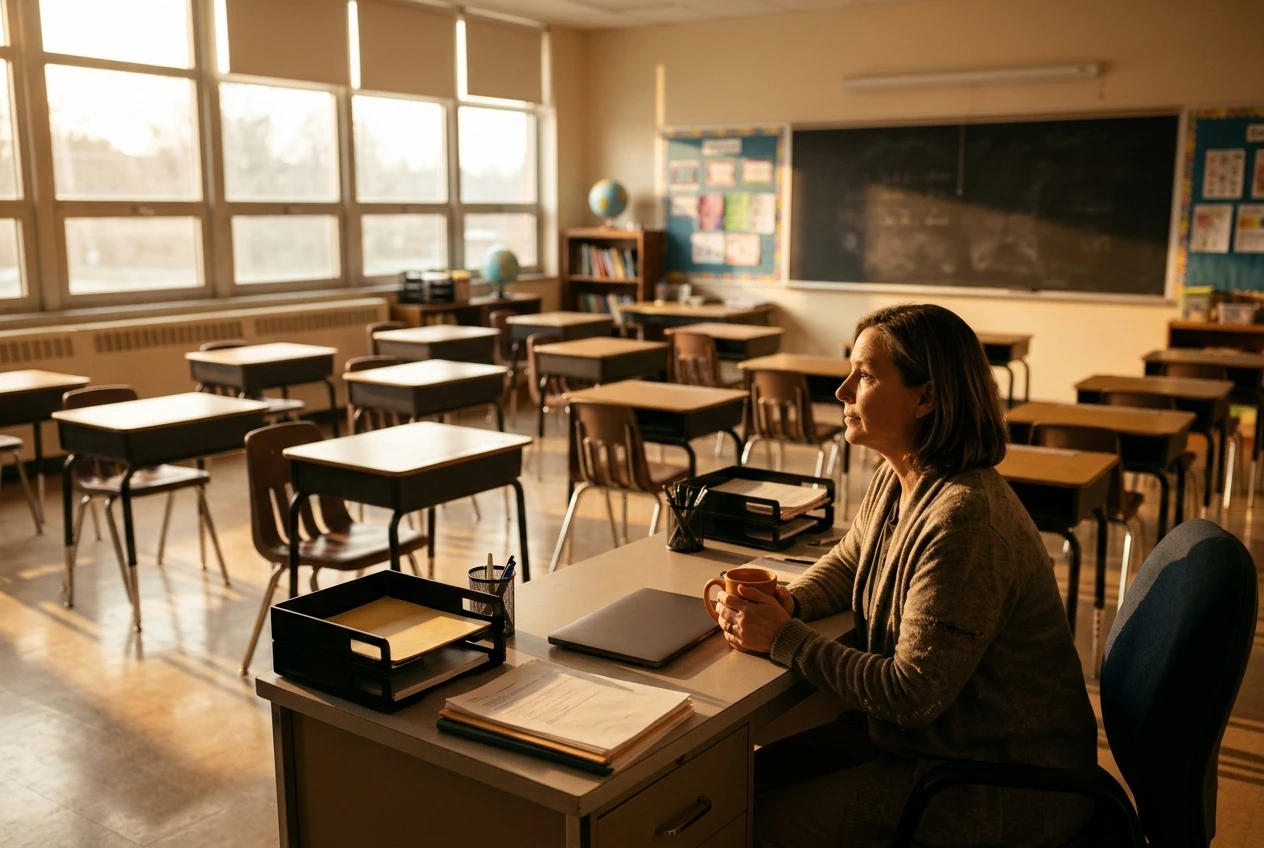
Protect your basics: sleep, meals, movement and time away from news coverage. Talk with colleagues you trust, and use any counseling or employee assistance your school or district offers. Say what you can and cannot take on, and ask for help with tasks such as covering a class or handling a difficult parent meeting. Share the load with the counselor and administrators so that you are not the only person holding a student’s situation.
Your steadiness is one of the strongest supports a student has, and it depends on you being rested enough to provide it.
If you would like help applying these ideas to a particular student, class or situation, consider making an online appointment to talk with one of our consultants to get individualized support and ideas to implement in the classroom.