

A parent who hears about a concern for the first time will read every later message in light of that conversation. If it felt like a verdict, they will look for what the school is getting wrong. If it felt like a shared problem, they will look for what they can do. This guide follows an intervention in order, from the first concern to the exit meeting, and gives the purpose, the wording and the follow-up for each conversation.
It is written for teachers, and also for parents and homeschooling families who want to know what a good conversation at each stage looks like. If you are on the parent side, the lists of what to expect double as questions you can ask.
Why the first phone call sets the tone for the whole intervention
Parents usually know their child better than anyone, but they rarely see the classroom. They may have noticed a reluctance to read aloud or a lot of homework tears. They may have noticed nothing at all. Either way, the first call or message gives them a frame for what is happening, and it is hard to replace later.
The purpose of that first contact is narrow: to share what you have seen, ask what they have seen, and agree to talk again. It is not the place to diagnose, promise an outcome or lay out a full plan. A short, specific, early conversation also does more good than a long one held after the report card has already gone home.
If you want the design side of the process, including how to decide what support looks like, Understanding Academic Interventions In The Classroom covers it. This article stays with the conversations.
Before you reach out: what to gather so the conversation is about the child, not the data
Numbers on their own sound like a judgment. A parent who hears “she scored 41 percent on the fluency check” has nothing to do with that sentence. Gather material that lets you describe the child.
Before you call, have these ready:

- Two or three work samples that show the same difficulty, such as a page of writing with the same type of error or a math task left half-finished.
- One or two strengths you can name with an example, such as “she explains her thinking well out loud.”
- What you have already tried in class, in plain terms: seating, extra time, a different explanation, a visual support.
- A short pattern description: when it happens, in which subjects, and whether it varies across the day.
- Your question for the parent: what do they see at home, and what does the child say about school?
Check the dates on everything. A concern built on one bad week reads differently from one that has run across a term, and parents will ask which it is.
Opening the conversation: how to name a concern without sounding like a verdict
Start with something true and specific about the child, then name the concern as an observation, then ask a question. The order matters because a parent who feels attacked in the first thirty seconds stops listening.
A workable opening:
“Thanks for making time. I wanted to talk about Maya because I’ve noticed something I’d like your view on. She’s great in discussions and her ideas are strong. When it’s time to write them down, she often stops after a sentence or two, and I’ve seen it in most of her written work over the last few weeks. Have you noticed anything like that at home?”
Several choices in that opening do work. “I’ve noticed” describes your view without claiming certainty. “Over the last few weeks” gives the time frame. The closing question hands the parent something to answer.
Avoid labels like “behind,” “weak” or “low,” and avoid naming a possible disorder. If a parent asks directly whether something is wrong, say what you have observed and that you would like to try specific support and check how it goes. Diagnosis belongs to the people qualified to make it.
Follow up within a day or two with a short written note: what you discussed, what the parent mentioned, and when you will speak next. The note matters most when a parent was surprised, because they will think the call over afterward.
The plan meeting: explaining the intervention in plain language and agreeing on what home can do
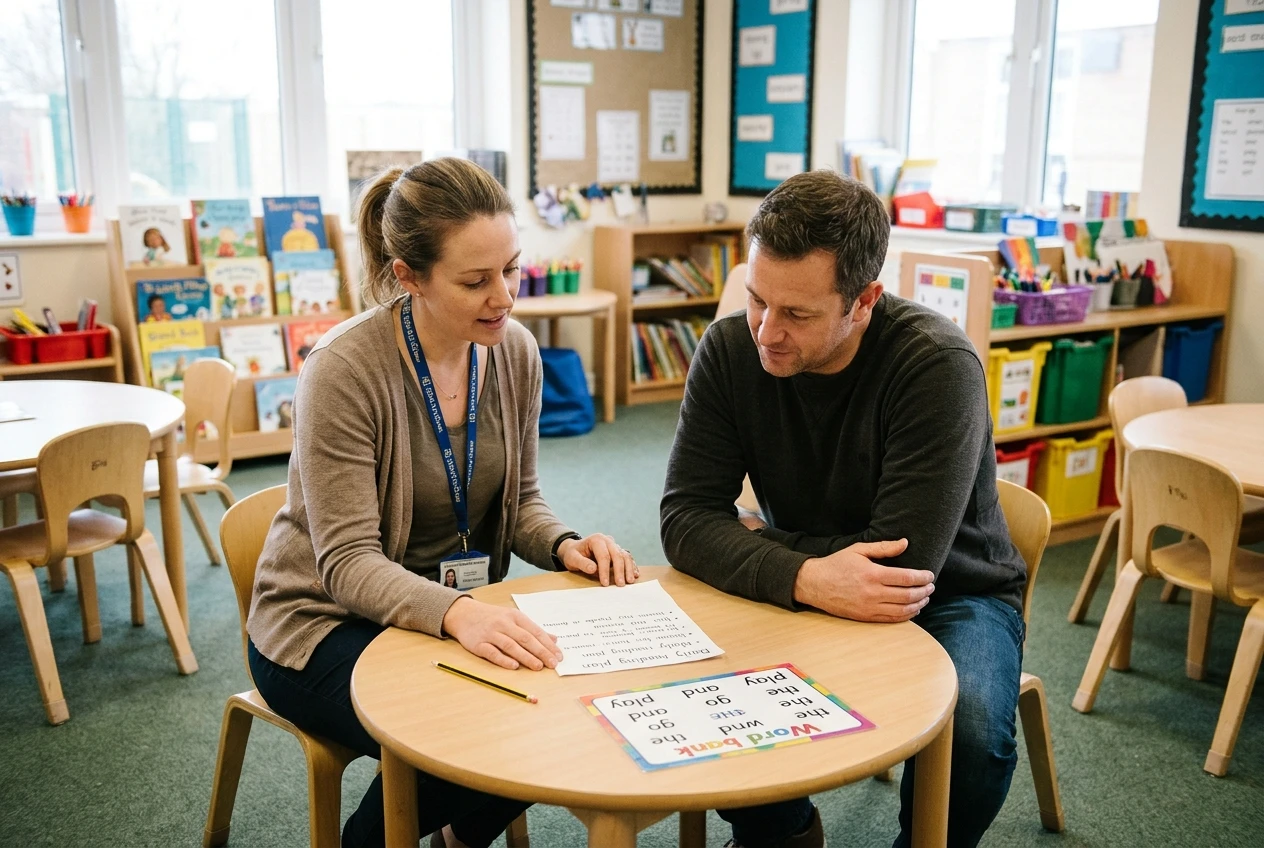
This meeting turns a concern into a plan. A parent should leave able to explain the intervention to a relative in two sentences. Test yourself on this: if you cannot say it without jargon, the parent will not be able to either.
Cover five points, in this order:
- The goal, in terms of what the child will be able to do. “Write four connected sentences about a topic on her own” is clearer than “improve written expression.”
- What the support is: who delivers it, how often, how long and during which part of the day.
- How you will measure progress, and what the parent will see as evidence.
- The review date, when you will look at the results together and decide what changes.
- What home can do, if anything.
On the last point, keep the request small. One ten-minute activity that is easy to keep up beats a daily worksheet routine that collapses by the second week. Ask the parent what is realistic in their house. Some families have time to read together nightly and others have a shared chore time where a quick conversation fits better. Homeschooling families can fold the same strategy into existing lessons and keep a note of what changed.
Invite questions explicitly: “What would you want to know if you were sitting where you are?” Write down the agreed plan, review date and home activity, and send it afterward. Designing Effective Intervention Routines can help if you are still working out the structure of the sessions themselves.
Progress updates parents will actually read: format, frequency and what to include
A parent who hears nothing for six weeks assumes either that nothing is happening or that something is wrong. Regular updates prevent both guesses, and they only work if they are short enough to read in a minute.
Pick one format and keep to it. A short email, a message through your school platform or a note in a communication folder all work. Choose the one the parent said they check. Frequency should match the intensity of the support: every week or two for a concentrated intervention, every three or four weeks for a lighter one.

Each update can follow the same four lines:
- What we worked on this period.
- What I saw, with one concrete example from the child’s work.
- What is next, including any change to the plan.
- How you can help, or “nothing extra needed right now.”
A sample:
“This fortnight we practised building sentences from a picture prompt. Maya wrote three connected sentences on Thursday without a reminder, up from one. Next we’ll add a fourth by using a word bank. At home, keep asking her to tell you about her day in a few full sentences; that’s plenty.”
Include real progress, and also include the parts that are not working yet. Parents trust updates that sometimes say “this has not moved.” Updates that are always positive get skimmed.
When progress stalls or a parent disagrees: staying collaborative and keeping a record
At some point most interventions flatten out. The response is to look at the plan, not to apply more pressure. Call the parent before the review date, say that progress has slowed, and ask what they have seen. A parent’s observation about timing, sleep, friendships or a recent change at home can explain a plateau that the work samples do not.
When a parent disagrees with the plan or the concern itself, restate what you heard before you respond. “It sounds like you’re worried this will make her feel singled out” shows you listened and often settles the tone of the whole conversation. Then separate what is agreed from what is not. Most parents and teachers want the same outcome and disagree about the route, so say so.
Useful phrases at this stage:
- “Here is what I’m seeing, and here is what I’m unsure about.”
- “Would you be open to trying this for three weeks and meeting to look at the results?”
- “What would you need to see to feel this is working?”
A time-limited trial gives a hesitant parent a way to say yes without conceding the argument. If the disagreement is about homework specifically, When a Parent Says No to Homework goes into that conversation in more depth.
Keep a record throughout. After every call or meeting, write down the date, who took part, what was said and what was agreed. Stick to facts and the parent’s own words where you can. If the situation later needs a wider team, a clear record protects everyone and saves you from reconstructing it from memory.
Closing the loop: the exit conversation and what happens after support fades
An intervention ends when the child can do the target skill without the extra support, or when the team agrees the approach needs to change. Both outcomes deserve a conversation, not just a line in a report.
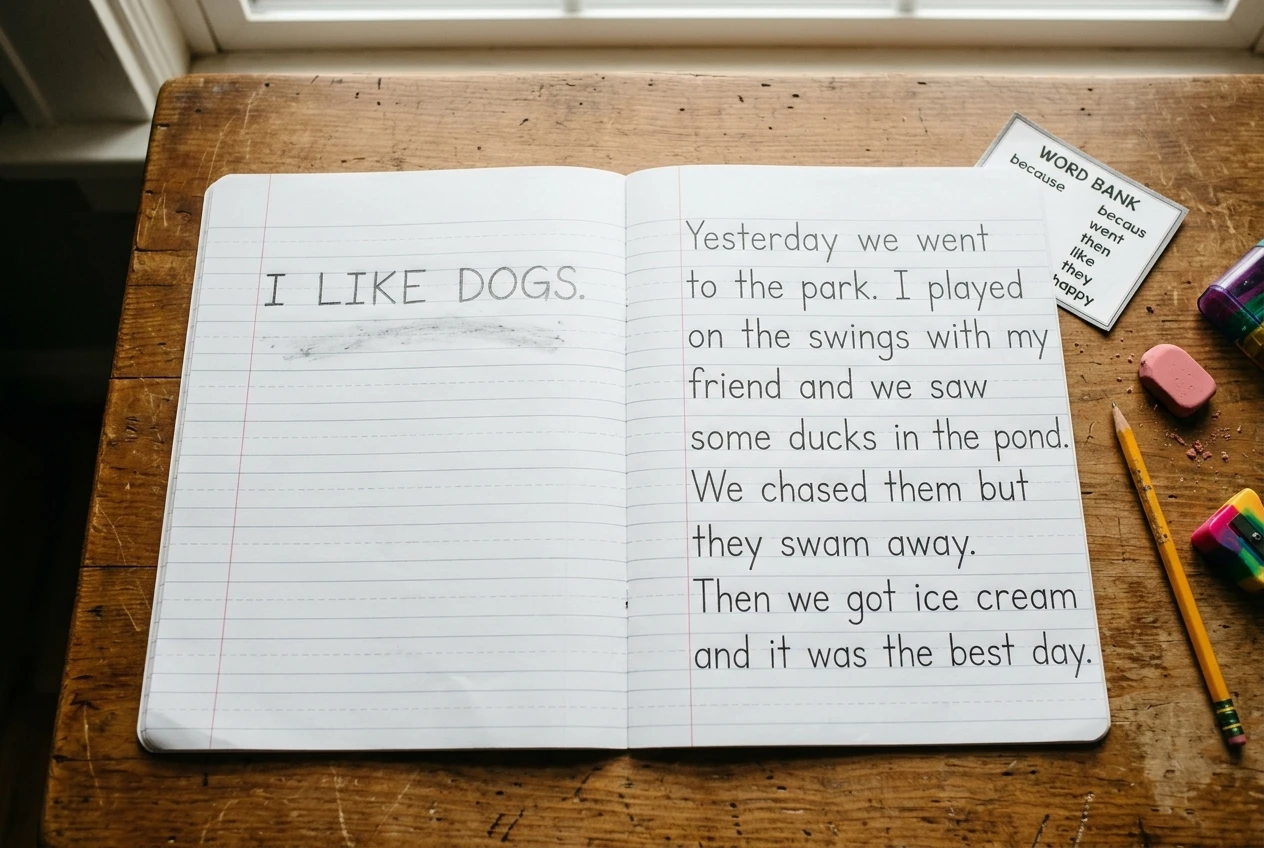
The exit meeting has three jobs. Show the parent the evidence of growth, using the same work samples you began with so the comparison is visible. Explain what is being reduced and what stays in place, because families often worry that support disappearing means the problem returns. And agree how you will check in afterward.
A sample:
“When we started, Maya wrote one or two sentences on her own. Now she regularly writes five or six. We’re going to stop the extra sessions, but I’ll keep the word bank on her desk and check her writing again in a month. If anything slips, I’ll contact you and we can restart quickly.”
If the intervention is ending because it has not worked, say that honestly and explain what you propose next, whether that is a different approach, a referral or a request for further assessment by the appropriate specialist. Parents handle “this didn’t work, and here is what we do now” far better than silence followed by a surprise.
Schedule a short follow-up message about a month later. A two-line note that says “still going well” completes the process and shows the parent the child was not dropped.
A simple communication log and sample scripts you can adapt
A log keeps all of the above consistent, especially when several children are in different stages at once. A simple table is enough:
Date Contact method Who took part Topic What was agreed Next contact Phone, email, meeting Parent, teacher, others Concern, plan, update, review, exit Actions and owners Date
Keep one log per child, and note the follow-up message you sent after each contact.
Adaptable scripts for each stage:
- First concern: “I’ve noticed [observation] in [setting] over [time frame]. I’d like your view: have you seen anything similar at home?”
- Plan meeting: “The goal is for [child] to [specific skill]. We’ll work on it [how often, who], and we’ll review on [date]. At home, a small thing that would help is [one activity].”
- Progress update: “This period we worked on [skill]. I saw [example]. Next we’ll [change]. You can help by [action or nothing extra].”
- Stall: “Progress has slowed, so I wanted to talk before our review. What have you noticed? I’d like to try [adjustment] for [time frame] and then look again.”
- Exit: “At the start, [child] could [baseline]. Now [current evidence]. We’re reducing support by [specific change], and I’ll check in again on [date].”
Change the wording to sound like you. A script that sounds natural in your voice will land better than one read word for word.
If you want a second pair of eyes on a tricky parent conversation or help building a communication plan for an intervention, book a virtual or in-person support session. The pre-made parent communication resources are there if you’d rather start from a template.